The project context retained for this note
This is a Malaysia-directed private-label caffeine pouch project. The case note keeps only the operational context needed to explain the work: a caffeine pouch format, private-label packaging coordination and a production stage that included label application.
Customer identity, individual names, chat messages, dates, order quantities, prices, formula details, artwork, barcode data and product-label copy have been removed. The note is a process example, not a customer testimonial or a statement about market authorization.
Production confirmation before the pack step
The retained status is simply: Production confirmed. Keeping that short, non-identifying statement makes the sequence clear without publishing correspondence or a customer contact trail.
For a private-label project, this hand-off is most useful when the approved pouch brief, current label artwork and packaging components are aligned before labels are applied. It prevents a production update from becoming a substitute for an approval record.
Label application with brand-sensitive details removed
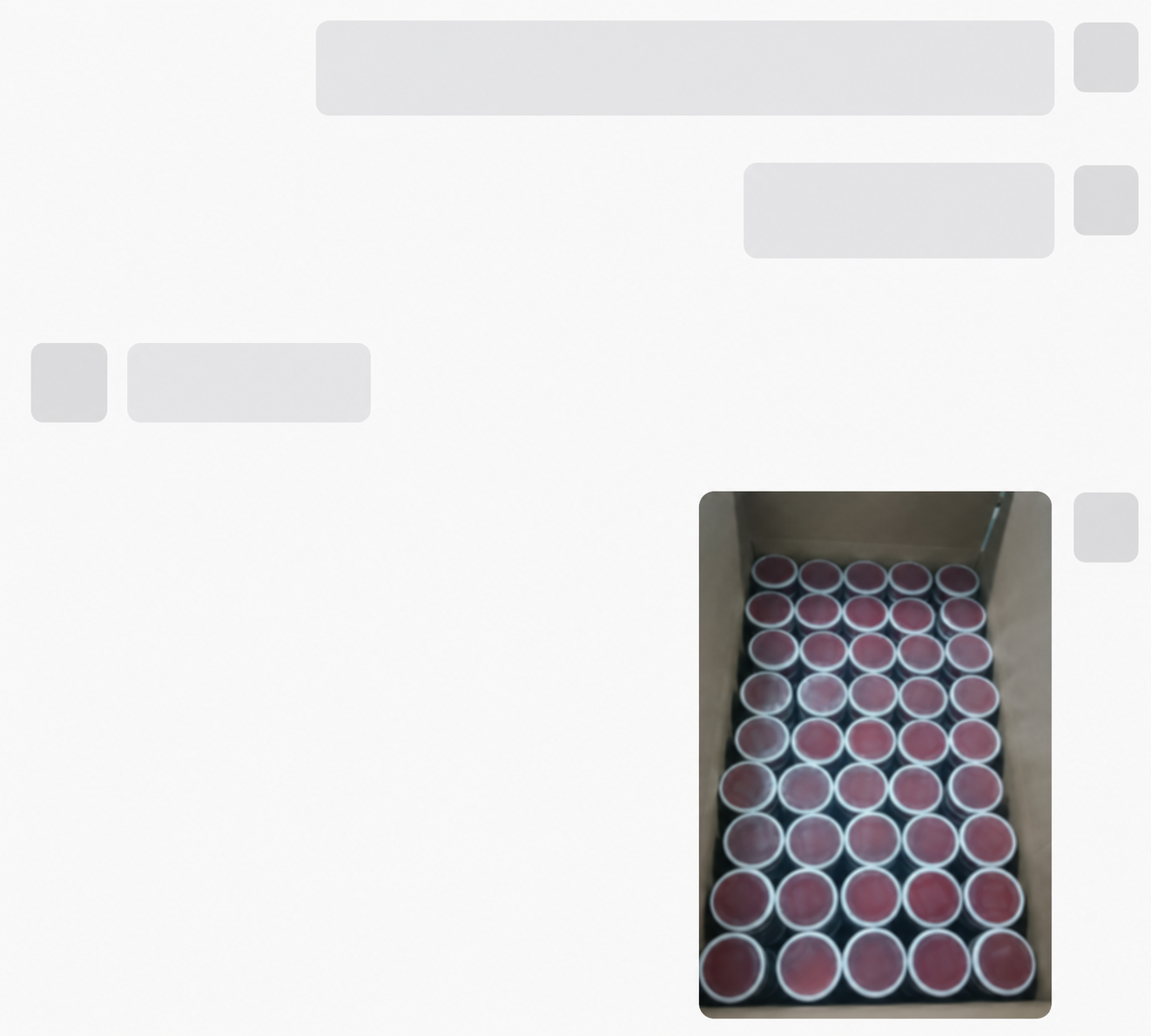
The supplied production media records a label-application stage. The public version does not display the original video because can labels, customer branding and machine-visible identifiers must not be exposed. The anonymous case visual is used instead.
Before a similar project is shared externally, remove brand names, barcodes, lot or date codes, order references, facility identifiers and any spoken audio that could identify a customer. A redacted operational image should show the stage of work, not reveal the customer’s finished pack.
What procurement teams can take from this example
Private-label caffeine pouch work benefits from treating the pouch, can, label and carton as one controlled pack system. Named approval owners and version-controlled artwork reduce the risk of applying a superseded label during the final packaging steps.
The customer and its qualified advisers remain responsible for reviewing the finished formula, label and intended market route. Wexbari can support a structured OEM/ODM production workflow, but production activity alone does not establish product compliance or market suitability.
BRIEF CHECKLIST
Bring these inputs to the first conversation.
- Target market and caffeine pouch product category confirmed in the brief
- Current label and packaging artwork version approved by the assigned owner
- Can, label, carton and shipper components matched to the released pack configuration
- Sensitive project materials redacted before a case example is shared publicly